 how-to
How to Buy a Home Remotely From Out of State Step by Step
Quick Summary
Buying home remotely from out of state is a routine process when you rely on a local agent, a clear checklist, and digital tools. Most steps, including tours, financing, inspection, and closing, can be handled on the phone, on a screen, or through secure online paperwork.
- Build a written checklist that tracks every deadline and document.
- Choose a local agent who responds the same day and offers live video tours.
- Request a live video tour and ask the agent to open closets and show major systems.
- Hire a licensed local inspector who attends by video and sends a full written report.
- Verify every wire instruction by phone with a known number before sending any money.
Table of Contents
- Why Buying Home Remotely From Out of State Is Easier Than It Looks
- Step 1: Build Your Out-of-State Homebuying Checklist
- Step 2: Choose a Local Agent You Can Trust From a Distance
- Step 3: Conduct Virtual Tours That Reveal the Real Property
- Step 4: Secure Financing Without Being in the Room
- Step 5: Arrange a Remote Home Inspection You Can Trust
- Step 6: Complete a Remote Real Estate Closing Without Surprises
- Common Mistakes Out-of-Town Buyers Make
- Buying an Investment Property Out of State: What Changes
- Booking Your Remote Purchase With NextHome Milestone in Woodland Hills
- Frequently Asked Questions
How to Buy a Home Remotely From Out of State Step by Step
Last Updated: October 30, 2026
Why Buying Home Remotely From Out of State Is Easier Than It Looks
Buying a home from another state can feel impossible, but buying home remotely from out state is a routine process for many buyers. At NextHome Milestone, we help clients close on homes without ever walking through the front door in person.
Most of the work happens on the phone, on a screen, and through paperwork. You need a clear plan, a trustworthy local team, and a habit of checking every document before you sign. Once those pieces are in place, the process becomes far more manageable.
Here is what makes remote buying work:
- A local agent who acts as your eyes and ears
- A digital document system you can review anytime
- A lender and inspector who will talk with you directly
- A written checklist that tracks every deadline
According to National Association of Realtors Profile of Home Buyers and Sellers, buyers rely heavily on agents and online tools throughout the search, which makes remote coordination a common approach rather than an unusual one.
Step 1: Build Your Out-of-State Homebuying Checklist
Your first task is to write down everything that must happen before closing. A written checklist keeps you from missing a deadline when you are working across time zones.
Start with these core items:
- Budget and pre-approval letter
- Target neighborhoods and must-have features
- Names of your agent, lender, inspector, and escrow officer
- Document upload location and login details
- Calendar dates for inspection, appraisal, and closing
Review the checklist once a week. Update it whenever a date changes or a new task appears.
Watch out: Skipping the budget step is a common error. A pre-approval tells you what a lender will lend, but it does not tell you what you can comfortably afford once taxes, insurance, and maintenance are added.
Step 2: Choose a Local Agent You Can Trust From a Distance
A local agent is the most important person on your remote team. They tour homes for you, answer questions quickly, and know the neighborhoods well enough to spot problems that photos hide.
Look for an agent who:
- Works regularly in your target area
- Responds to messages the same day
- Explains contracts in plain language
- Offers video walkthroughs and live calls
- Provides references from other out-of-town clients
Ask for a sample schedule of how they will communicate during the search. If the answer is vague, keep looking. Good agents are specific about how often they will update you and how they will share feedback after each showing.
Step 3: Conduct Virtual Tours That Reveal the Real Property
Virtual tours are useful, but they can hide details. A live video call gives you more control than a pre-recorded listing video.
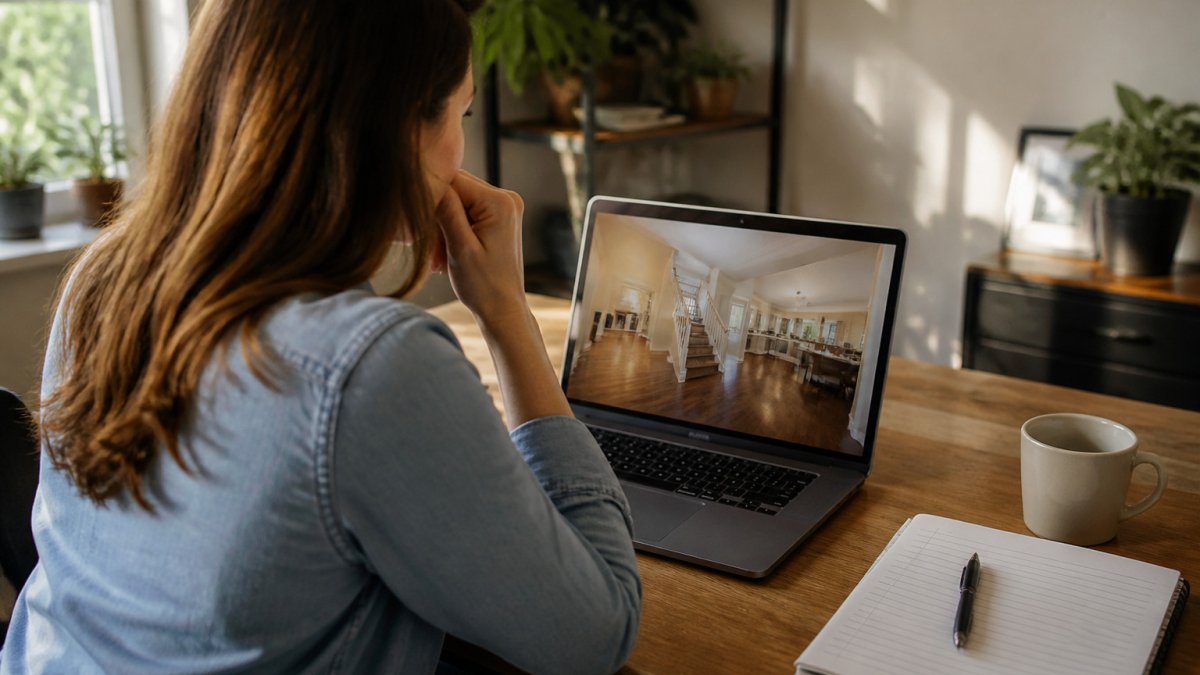
During a live tour, ask your agent to:
- Turn on every light and faucet
- Open closets, cabinets, and the attic hatch
- Show the water heater, electrical panel, and HVAC unit
- Walk the perimeter, including fences and drainage areas
- Film the street and neighboring properties
Bring a list of questions for each room. Ask about roof age, sewer line history, and any past water intrusion. Your agent can often get written answers from the seller before you make an offer.
Tip: Record the tour, with permission, so you can review it later and compare it with other homes.
Step 4: Secure Financing Without Being in the Room
Lenders now handle most of the loan process online. You can usually upload income records, bank statements, and tax returns from your computer or phone.
Work with a lender who:
- Offers secure online document uploads
- Assigns a single loan officer as your contact
- Explains each stage of underwriting clearly
- Can notarize documents through a remote service if needed
Ask your lender how long each step takes. Keep your employment, income, and bank balances stable until closing, because lenders often recheck them shortly before funding.
Step 5: Arrange a Remote Home Inspection You Can Trust
A home inspection is essential when you cannot visit in person. Hire a licensed inspector who serves the area where the home sits, and ask them to send a full written report with photos.
Ask the inspector to:
- Attend the inspection by video so you can see what they see
- Explain any items that need a specialist
- Note the age of major systems
- Send the report within a day or two
Step 6: Complete a Remote Real Estate Closing Without Surprises
Most closings in the United States now allow buyers to sign remotely. Your escrow officer or title company will send the closing documents through a secure portal, and you will sign electronically or through a remote notary.
Before closing, confirm:
- The final loan amount and monthly payment
- The amount of money you need to wire
- The wiring instructions, verified by phone with a known number
- The date when keys and access codes will be handed over
Never send money based on an email alone. Fraudsters often target out-of-town buyers with fake wire instructions. Call your escrow officer at a number you already have before transferring any funds.
The National Association of Realtors also publishes guidance on remote closings and digital signatures that can help you prepare, as described in NAR Guidance on Remote Online Notarization.
Common Mistakes Out-of-Town Buyers Make
Remote buyers often run into the same problems. Knowing them ahead of time helps you avoid costly delays.
- Skipping a live tour. Photos can hide water damage, noise, and bad layouts.
- Waiting too long to hire an inspector. Schedule the inspection as soon as your offer is accepted.
- Ignoring local rules. HOA fees, property taxes, and insurance costs vary by area.
- Missing wire fraud warnings. Verify every payment instruction by phone.
- Failing to plan for the move. Book movers and utilities before you arrive.
Remote buyers often run into the same problems. Knowing them ahead of time helps you avoid costly delays.
| Mistake | Why It Hurts | Fix |
|---|---|---|
| Skipping a live tour | Photos can hide water damage, noise, and bad layouts | Book a live video tour with your agent |
| Waiting too long to hire an inspector | Delays can threaten your timeline | Schedule the inspection as soon as your offer is accepted |
| Ignoring local rules | HOA fees, property taxes, and insurance costs vary by area | Research local costs before you commit |
| Missing wire fraud warnings | Fake wire instructions target out-of-town buyers | Verify every payment instruction by phone |
| Failing to plan for the move | Movers and utilities need lead time | Book movers and utilities before you arrive |
Buying an Investment Property Out of State: What Changes
Investment buyers face extra questions. You must consider rent levels, vacancy rates, property management, and local landlord laws. Many investors who buy from another state rely on a property manager who lives nearby and reports monthly.
Before you commit, ask your agent to pull recent rental comparisons and talk with a property manager. Confirm how repairs are approved and paid. A clear plan for maintenance can protect your return.
For a deeper look at the steps involved, read our guide on how to buy an investment property. It covers financing, cash flow analysis, and negotiation strategy in detail.
Booking Your Remote Purchase With NextHome Milestone in Woodland Hills
Buying a home from another state is manageable when you have the right team and a clear plan. NextHome Milestone is independently owned and operated and family owned for the last 21 years.
If you are ready to start, contact our Woodland Hills office to schedule a call and map out your remote purchase.
Frequently Asked Questions
How do you buy a house remotely from out of state?
Buying a house remotely works by assigning the work to people you trust locally and staying in control of the decisions. Start with a licensed agent in the target area, use live or recorded virtual tours, and get pre-approved for a mortgage before you make offers. Sign documents electronically where your lender and title company allow it, and confirm the notary and wire-fraud procedures in advance. Verify every wire instruction by phone using a number you already have, not one from an email.
Can you complete a home closing remotely?
In many states you can complete a closing remotely, but rules vary. Some states allow remote online notarization (RON), while others require a traditional in-person signing or a local notary. Ask your title company early whether a mobile or remote notary can handle the signing, whether they accept electronic signatures, and how funds will be wired. Plan for the original documents to be mailed or overnighted when required.
What should I check before buying a home remotely?
Before you commit, check the property's inspection history, the seller's disclosures, property tax records, HOA rules, and any flood or insurance requirements. Confirm the neighborhood's recent sales through public records and review local zoning if you plan to rent the home. Ask your agent for photos and documents of anything the listing does not show, such as the roof age, the water heater and the foundation.
How long does it take to buy a home from out of state?
Buying from out of state often takes a few weeks longer than a local purchase, mainly because inspections, appraisals and signing appointments must be scheduled around travel and notary availability. Pre-approval, agent selection and document gathering can happen within the first week or two. Ask your lender and title company for a realistic timeline based on your loan type and the state where the property is located.